HYNC Series Hydraulic Nut Splitter Operation Video
Watch this step-by-step demonstration to learn how to operate a KuDos HYNC Series hydraulic nut splitter safely and correctly.
The video shows how to position the splitter on the nut, connect it to a compatible 700-bar hydraulic pump, apply hydraulic pressure, and complete the nut-splitting operation.
Key Features
Compact design
Easy to use
Seven splitter models are available for bolts ranging from M6 to M48 and hex nuts ranging from 10 to 75 mm.
Unique angled head design suitable for a variety of applications.
Single-acting, hydraulic-advance and spring-return cylinder.
Compatible with hydraulic pumps rated at 700 bar (10,000 psi).
Applicable Models
The operating procedure demonstrated in this video applies to the following KuDos hydraulic nut splitter models:
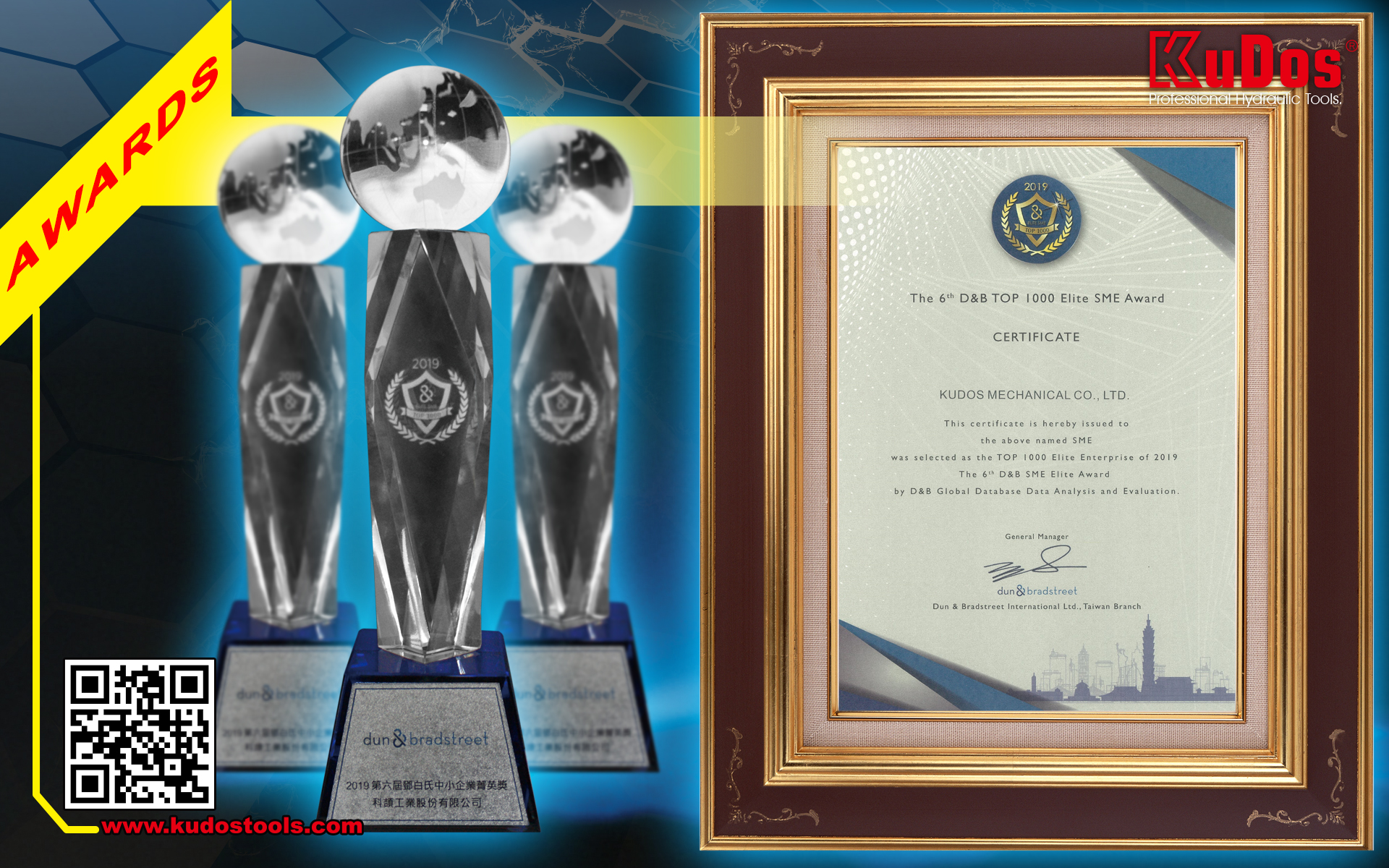
The Top 1000 Elite Small- and Medium-sized Enterprises (SME) Award was given to us again this year by Dun & Bradstreet, a global leading institution that provides commercial data, analytics and insights for businesses. This is the third times that KuDos has received this award in past 3 years as KuDos has been recognized by growth and contribution to the country’s economy based on a comprehensive “big data” analysis. The recipients must exceed three requirements: companies’ financial health, procurement amount, and export growth rate for consecutively 3 years. There are around 1.3 million SMEs in Taiwan (~90% of the Taiwanese companies) and we are proud to announce that KuDos is the ONLY company among our competitors in Taiwan that was selected.
A:
A:
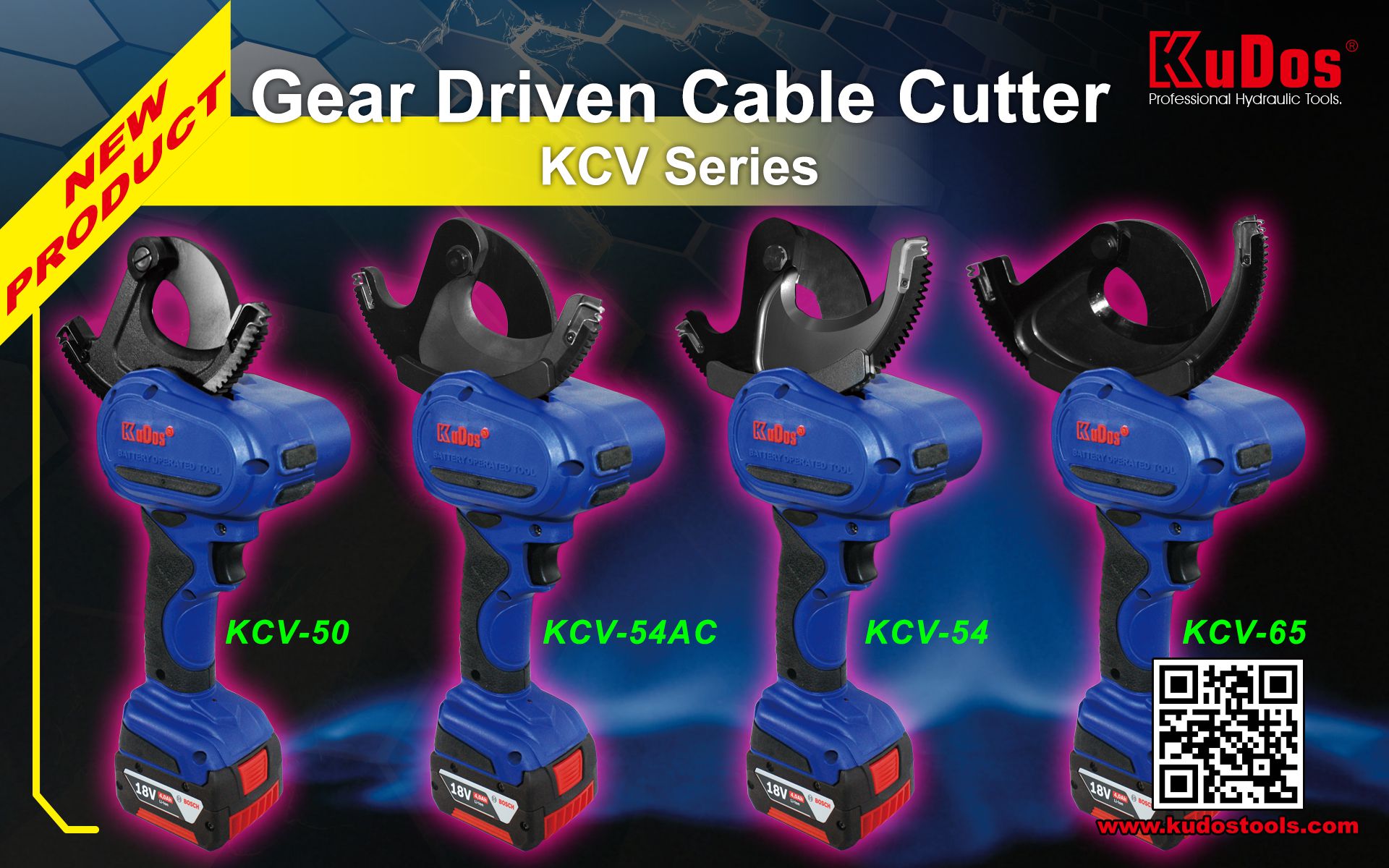
With the rapid growth of electrical engineering and automation equipment, cable cutters have become essential tools for switchboard assembly, electrical installation, and substation maintenance. However, the market offers a wide variety of cable cutters, and many technicians often ask :
“ What’s the real difference between regular cutters and ratchet cutters ? ” “ Why can others cut large-gauge cables so easily while my hands get inflamed ? ”
Choosing the wrong cable cutter not only reduces work efficiency but also increases the risk of occupational injury and cable deformation. This guide explains the force-saving mechanism, space limitations, and cable size considerations to help you fully understand the differences between regular cable cutters and ratchet cable cutters, and select the right tool for your job.
(1). Regular vs. Ratchet Cable Cutters :
To choose the right tool, you must first understand their structure and design logic.
Regular Type : Long handles → Relies entirely on human force → Best for small wires & open spaces.
Ratchet Type : Internal gear teeth → Segmented mechanical advancement → Best for thick cables & confined spaces.
1. Regular Cable Cutters : Classic And Simple.
Working Principle : Fully dependent on human force and the lever action of long handles.
Advantages :
Simple structure.
Durable and less prone to damage.
Affordable.
Fast opening and cutting speed.
Disadvantages :
Requires significant grip strength for large cable diameters.
Handles must be opened wide to bite into the cable, consuming a lot of space.
2. Ratchet Cable Cutters : Modern, Efficient, And Force-Saving.
Working Principle : Built-in ratchet mechanism.
Advantages :
Each squeeze advances the blade one step while locking the previous position.
Converts one large force output into multiple small squeezes.
Reduces overall effort bymore than 50% .
Disadvantages :
Cutting a single cable takes slightly longer due to segmented advancement.
Open construction sites or ground work : Space is not limited; if mostly cutting small wires → Regular cutters offer faster cutting speed.
2. Cable Specification & Diameter :
≤ 50 mm² (control wires, flat white cables) : → Regular cutters are sufficient, fast, and economical.
≥ 50 mm² (high-voltage power cables) : → Strongly recommended : Ratchet cable cutters. (Using regular cutters may deform the cable and cause wrist injuries.)
3. Usage Frequency & Fatigue :
Daily continuous work :Ratchet cutters significantly reduce fatigue and extend career longevity.
Occasional maintenance / DIY :Regular cutters are a high-value basic option.
(4). Important Safety Notes For Ratchet Cable Cutters :
Even though ratchet cutters are force-saving tools, pay attention to the following to extend tool life :
Do NOT Cut ACSR Or Steel Wires.
Ratchet cutters are designed forcopper and aluminum cables only. Cutting high-hardness steel will cause blade chipping and gear damage.
Maintain The Sear Teeth Regularly.
The ratchet mechanism consists of fine gear teeth. Clean metal debris after use and apply anti-rust lubricant regularly to ensure smooth operation.
(5). Conclusion : The Right Tool Makes The Work Right.
There is no universally “ best ” tool—only the one most suitable for your job site.
Investing in a high-quality ratchet cable cutter not only boosts on-site efficiency but also ensures perfectly smooth cut surfaces, providing a solid foundation for subsequent terminal crimping.
A:
In electrical installations, achieving a safe and reliable cable connection depends heavily on correct crimping technique. Improper tool pressure or human error can severely compromise electrical integrity and safety. Below is a detailed breakdown of what happens when tool pressure is insufficient, how to prevent it, and common operational mistakes to avoid.
(1). What Happens When Tool Pressure Is Insufficient ?
When a Hydraulic Crimper delivers insufficient pressure, the terminal and cable conductor fail to form a dense, seamless “cold weld.” This creates a domino effect of serious operational risks:
Increased Contact Resistance : Air gaps remain between the metal contact surfaces, significantly raising electrical resistance.
Overheating And Meltdown : Passing high currents through a high-resistance junction generates extreme heat (Joule heating). This can melt the protective insulating sleeves (thermoset/plastic boots) or scorch the cable's primary insulation.
Terminal Pull-Out And Loosening : Weak crimping force severely reduces pull-out strength. External tension, mechanical vibrations, or thermal expansion and contraction can cause conductors to slide out of the terminal, leading to open or short circuits.
Electrical Fire Hazards : Prolonged localized heating combined with arcing is one of the leading causes of fires in factories and distribution boxes.
Accelerated Metal Oxidation: Poor compaction traps air and moisture inside the crimp sleeve, accelerating copper or aluminum wire oxidation and further degrading conductivity over time.
(2). How To Prevent Pressure Deficiencies
To ensure your hydraulic crimper consistently produces design-rated tonnage, incorporate these routine checks and maintenance practices:
Inspect Hydraulic Oil Levels And Leakage : Periodically check the tool cylinder for oil stains. If you experience loss of force or excessive handle free-play, top off or bleed the system with specified hydraulic fluid.
Confirm Relief Valve Activation : Manual hydraulic tools feature a safety relief valve. Always pump until you hear an audible click or feel a distinct drop in resistance—indicating the system has reached its maximum preset tonnage (e.g., 6-ton or 12-ton).
Schedule Regular Calibration : Send crimping tools to the manufacturer or an accredited test facility periodically to verify actual output force using a pressure gauge.
Inspect Dies For Wear And Matching : Worn or deformed dies distribute force unevenly over the terminal barrel. Replace dies immediately if you spot cracks, chipping, or excessive wear.
Looking for a hydraulic crimping tool that matches your cable size, required output force, and working environment ? Explore KuDos Hydraulic Crimpers .
(3).Common Cable Terminal Crimping Errors
Beyond tool malfunctions, improper operator technique is a primary driver of crimp failures:
1. Specification Mismatches
Die Too Large : Using an oversized die leaves the terminal loose on the conductor, providing zero mechanical hold or electrical contact.
Die Too Small : Using an undersized die over-compresses the metal, forcing excessive material outward into sharp “wings” (flashing) or cracking the terminal wall.
Wire / Terminal Mismatch : Stuffing a small cross-section cable into an oversized terminal barrel leaves massive internal gap.
2. Improper Wire Stripping And Prep
Incorrect Strip Length : Stripping too short prevents the conductor from filling the crimp barrel; stripping too long leaves bare copper exposed outside the sleeve, creating a shock or short-circuit hazard.
Damaged Strands : Nicking or cutting away wire strands during stripping reduces the effective cross-sectional area and lowers current-carrying capacity.
Failure To Clean Oxidation : Crimping over green or black oxidation on older cables without scrubbing with a wire brush results in poor electrical contact.
3. Incorrect Crimping Position And Sequence
Misaligned Crimp Location : Crimping directly over the inspection hole or too close to the terminal palm deforms the structural integrity of the lug.
Reversed Multi-Crimp Sequence : For long terminal barrels requiring 2 or 3 crimp passes, failing to crimp sequentially from the palm end working back toward the cable end traps air and distorts the conductor inside the barrel.
Find The Right Hydraulic Crimping Tool
KuDos provides professional hydraulic crimping tools for different cable sizes, output-force requirements, and jobsite applications. Explore our product range or contact us for help selecting a suitable model.
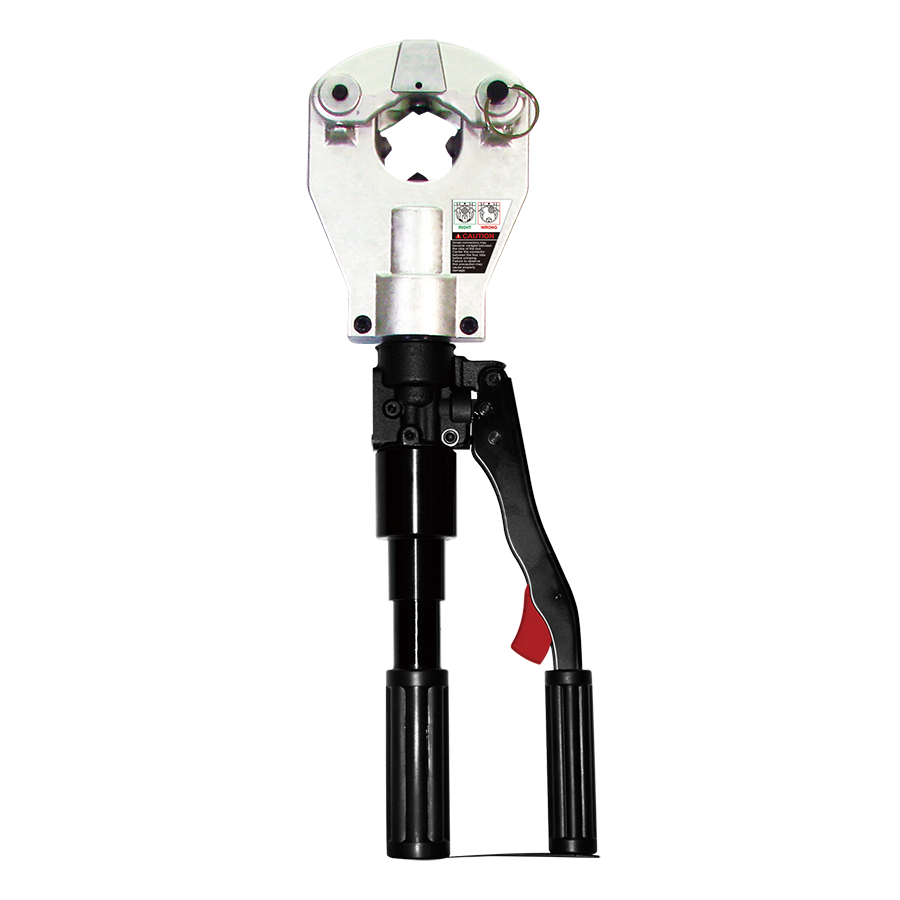
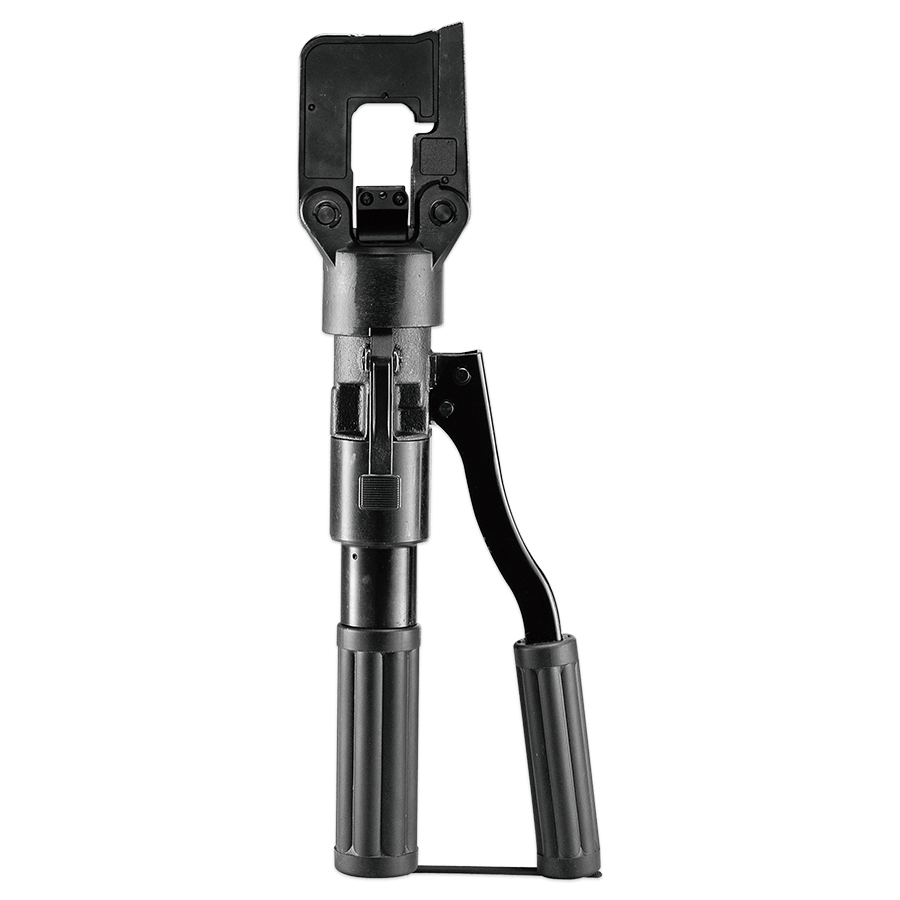
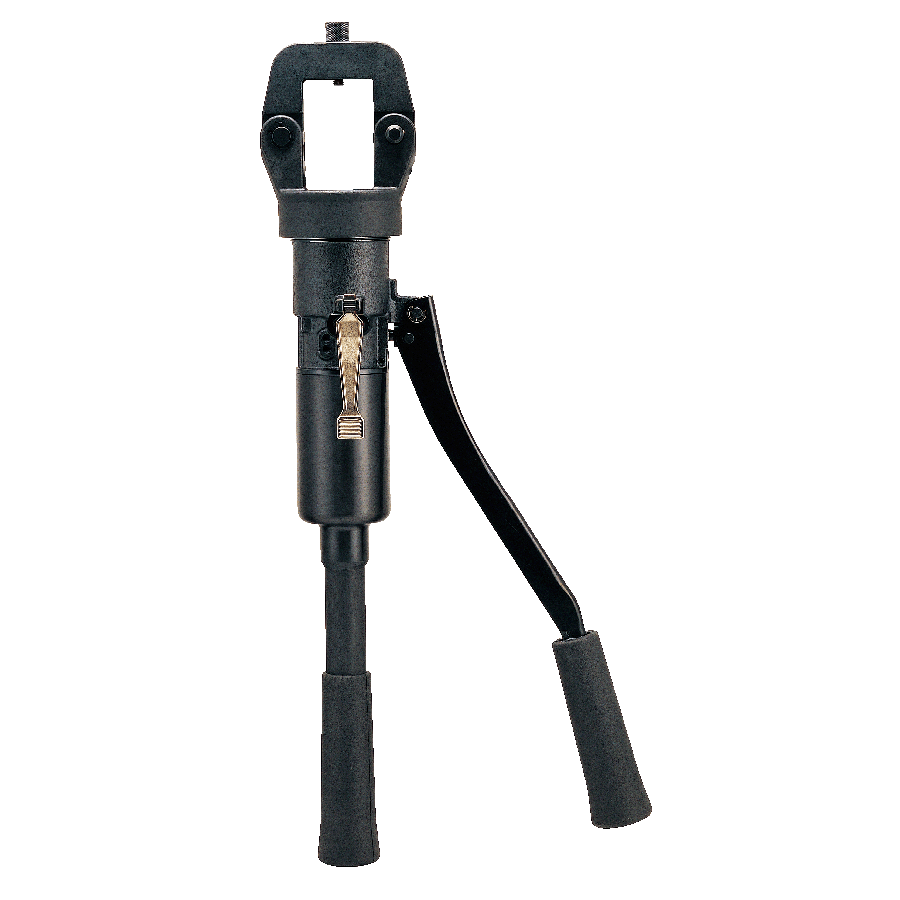
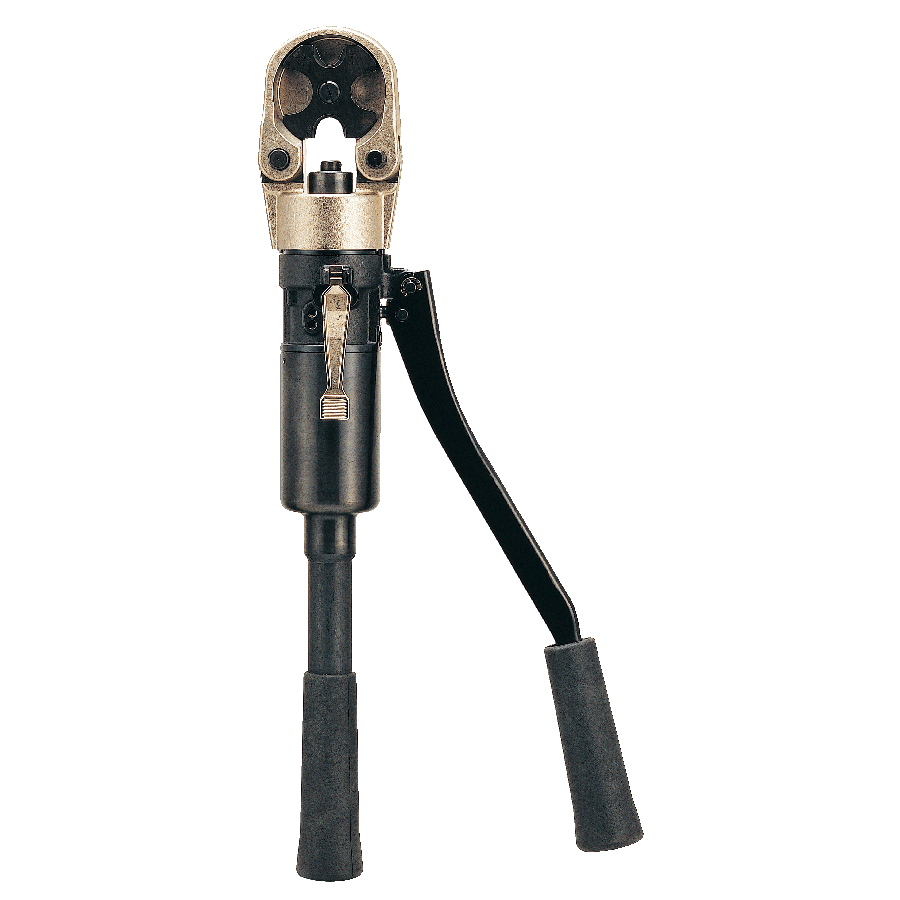
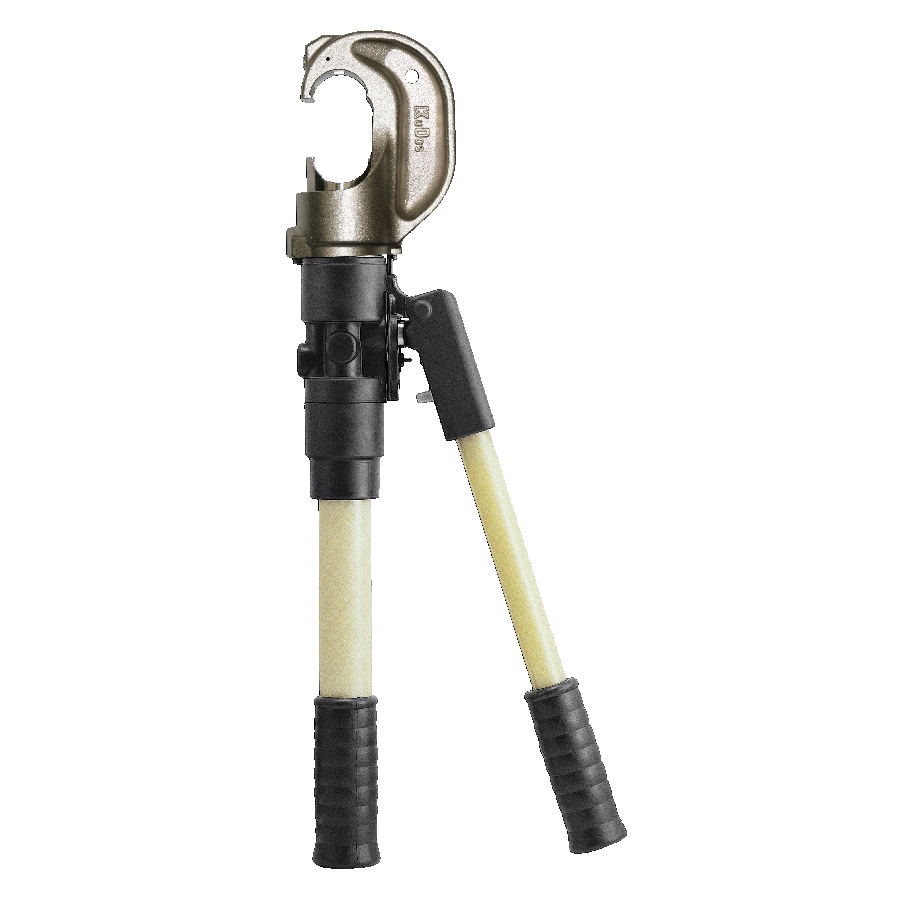
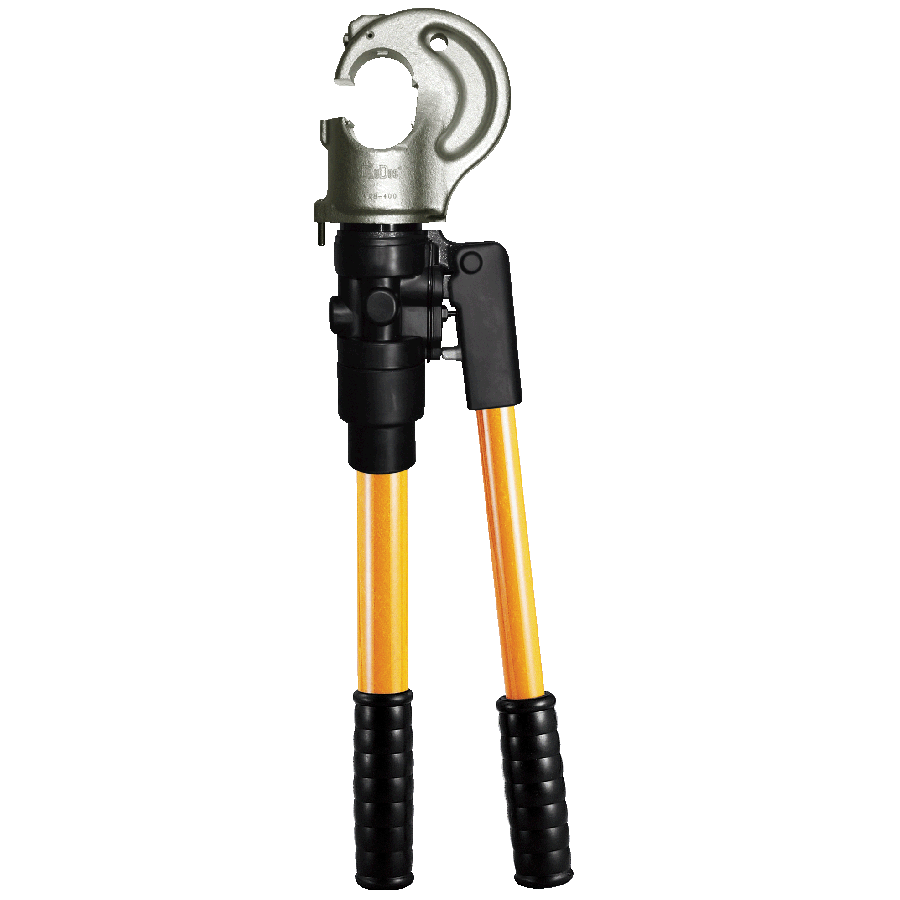
Compare KuDos self-contained manual hydraulic crimpers for electrical cables, copper and aluminum lugs, non-insulated terminals, sleeves and Anderson-style connectors. If your application requires an external hydraulic pump, view KuDos hydraulic crimping heads instead.
Important : Select the tool, die, conductor and connector as one compatible system. A matching conductor size or physical fit alone does not confirm suitability. Contact KuDos to verify the correct combination for your application.
Choose The Right Hydraulic Crimping Tool Type
Before comparing models, determine whether you need a self-contained hydraulic crimper or a remote hydraulic crimping head. The model comparison on this page covers KuDos self-contained manual hydraulic crimpers.
Self-Contained Hydraulic Crimpers
Choose this type when you need an integrated hand pump for portable, on-site operation without a separate hydraulic pump.
Choose this type when the crimping head will be connected to a compatible external hydraulic pump for remote operation, higher output, or restricted working spaces.
Requires a compatible external hydraulic pump and hose.
Available for higher-output and larger-capacity applications.
Suitable for remote operation and confined working areas.
Step 2 : Confirm The Requirements That Narrow The Choice
Before comparing model numbers, collect the information below. These four checks prevent a capacity match from being mistaken for a confirmed tool–connector match.
Conductor And Connector
Confirm conductor material, nominal size, construction, connector type, connector manufacturer, part number, and outside diameter.
Die Or Dieless System
Identify whether the application requires dieless compression, BEKU, hexagonal, indent, support dies, or another documented die system.
Operation And Pumping
All models in this comparison are classified from their published pages as self-contained manual hydraulic crimpers. Compare single-stage or two-stage pumping and confirm the final classification with KuDos.
Access And Portability
Check jaw opening, head rotation, tool length, weight, and available working clearance before choosing between otherwise similar models.
Step 3 : Build A Shortlist
Use these recommendations as a starting point, then confirm the complete tool, die, conductor and connector combination with KuDos.
Start with the UC-6FT or the shorter, lighter HU-6FT
Using BEKU dies for DIN 46235 terminals ?
Choose the HYCP-185 for listed dies through 185 mm² or the HYCP-240R through 240 mm²
Need hexagonal dies for large cable lugs ?
The HH-400XL lists six hexagonal die sets covering 120 ~ 400 mm²
Need one published model for copper or aluminum lugs ?
The UB-400 is listed for copper or aluminum lugs up to 400 mm²
Need the largest published jaw opening in this range ?
The HYCP-4413T has a published 44 mm jaw opening and is listed for copper lugs up to 400 mm²
Step 4 : Verify The Shortlisted Tools
Confirm the published application : verify that the product page covers the required lug, terminal, sleeve, or connector type.
Confirm the die system : check the exact die family, die part number, crimp profile and whether dies are sold separately.
Check capacity and access : compare conductor range, connector outside diameter, jaw opening, head rotation, tool length and weight.
Confirm operation and pumping : verify the manual hydraulic classification, pump stage, working pressure and whether any additional equipment is required.
Obtain final compatibility confirmation : verify the exact tool, die, conductor, connector and connector manufacturer’s required crimping procedure with KuDos before ordering or use.
The pump classifications below are based on the pumping-action or handle-operation descriptions on the current KuDos product pages. None of the reviewed pages specifies that a separate hydraulic pump is required. Confirm the final wording with KuDos before publication.
Copper lugs where a larger jaw opening is required
Up to 400 mm² ; dies sold separately
124.6 kN / 14.01 tons
700 bar
Integrated hand pump (two-stage)
44 mm
641 mm
7.6 kg
Specifications are reproduced from the current KuDos product pages. “Not stated” means the value is not published on the reviewed page. Confirm die, connector and conductor compatibility with KuDos before ordering or operation.
Hydraulic Crimper FAQ
Which KuDos hydraulic crimpers are dieless ?
UC-6, HU-6, UC-6FT, and HU-6FT are described as dieless tools for Anderson-style connectors. The UC-6 and HU-6 are rated up to 500 MCM ; the UC-6FT and HU-6FT are rated up to 750 MCM.
Which models accept BEKU-type dies ?
HYCP-185 and HYCP-240R accept BEKU-type dies. Their product pages list stock dies for DIN 46235 terminals.
Which model is listed for both copper and aluminum lugs ?
UB-400 is listed for copper or aluminum lugs up to 400 mm² , PH-300 is listed for aluminum lugs up to 300 mm²
Are dies included with every crimper ?
No. Multiple product pages state that dies are sold separately. Check the individual model page and request the required die set when asking for a quotation.
Can capacity alone be used to choose a crimper ?
No. Confirm the connector type, conductor material and size, die family, crimp profile, tool output, jaw opening and connector manufacturer’s installation requirements.
Step 6 : Prepare The Information For Final Confirmation
Include the following details in your inquiry so KuDos can verify the tool and die combination rather than recommending from conductor capacity alone.
Conductor material, construction and nominal size.
Connector manufacturer, part number, type, material and outside diameter.
Required crimp profile, die family, or existing die part number.
Available working clearance and preferred tool weight or length.
Destination market, expected order quantity and requested delivery timing.